
The Government of Goa has taken a significant step towards modernizing traffic management by implementing an AI-powered traffic enforcement system. Cameras equipped with artificial intelligence now detect traffic violations, helping improve road safety and ensuring that motorists obey the law. Technology, when used well, can undoubtedly make governance more efficient.
However, an important question arises: Should artificial intelligence only monitor citizens, or should it also monitor the government's performance?
Every day, thousands of Goans pay road taxes, vehicle registration fees, fuel taxes, and various other levies with the expectation that public infrastructure will be maintained to a reasonable standard. Yet many roads continue to be riddled with potholes, damaged surfaces, broken drains, and poor maintenance. These defects do more than inconvenience commuters—they damage vehicles, increase maintenance costs, cause accidents, and in severe cases, result in injuries and loss of life.
If AI can automatically detect a motorist crossing a stop line or riding without a helmet, surely the same technology can identify potholes, broken roads, missing manhole covers, damaged footpaths, malfunctioning streetlights, and other public infrastructure defects.
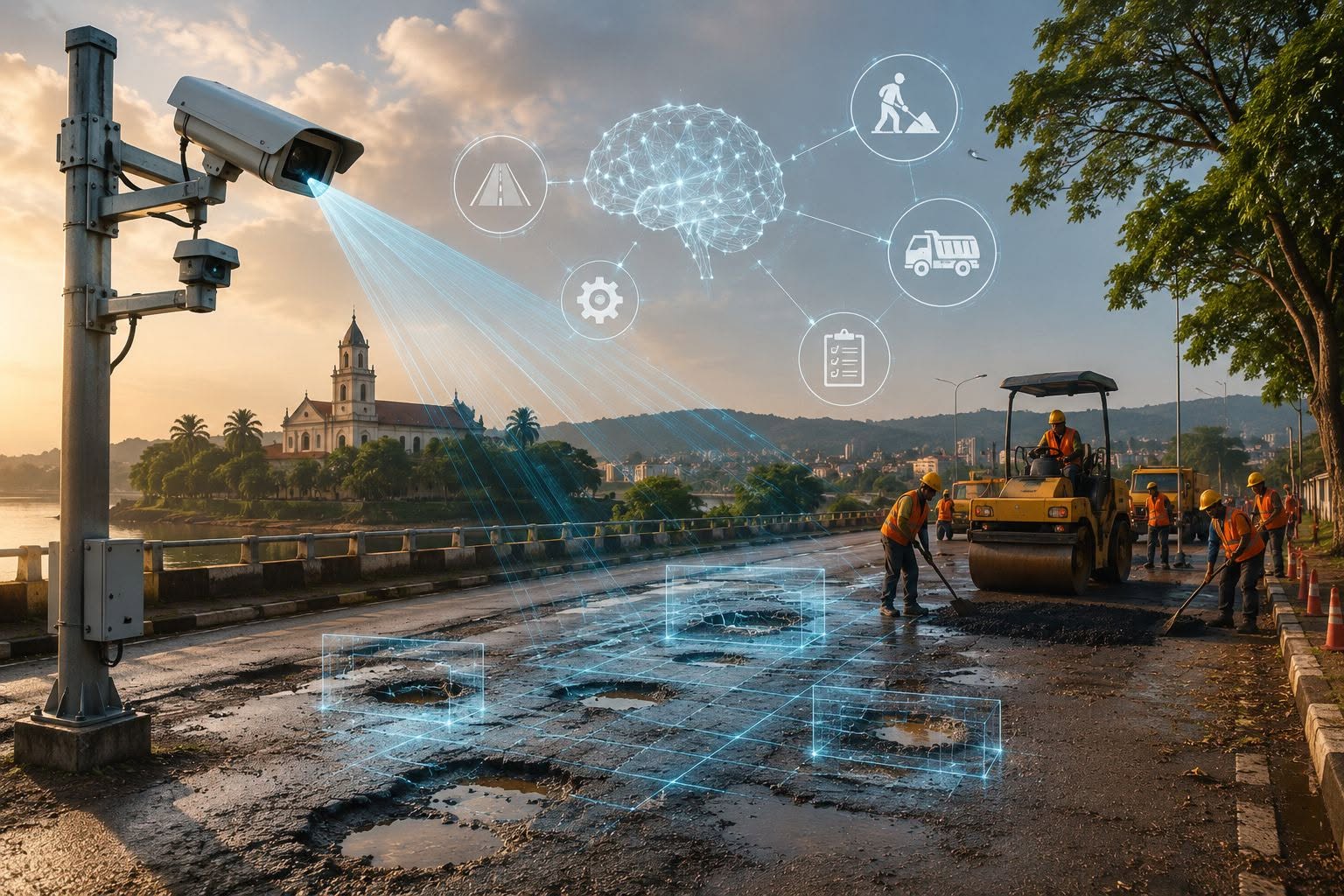
Imagine an AI Public Infrastructure Monitoring System. Cameras installed on government vehicles, buses, garbage trucks, public transport, or even existing CCTV networks could continuously scan roads. Once a pothole or damaged infrastructure is detected, the system would automatically record its GPS location, estimate its severity, assign it to the responsible department, and create a public work order.
More importantly, the system should introduce accountability. Every defect should carry a legally defined response time based on its severity. If repairs are not completed within that period, financial penalties should automatically be imposed on the responsible contractor or department, subject to due process and existing service contracts. The collected penalties could be directed into a dedicated road maintenance fund, ensuring that neglect carries measurable consequences.
Such a system would create accountability in the same way AI traffic enforcement creates accountability for motorists. Citizens should not be the only stakeholders expected to comply with standards; public authorities and contractors responsible for maintaining infrastructure should also be evaluated against objective performance metrics.
Transparency should form the foundation of such an initiative. A publicly accessible dashboard could display reported defects, repair status, estimated completion dates, department responsible, contractor assigned, and historical performance. Citizens would be able to verify whether complaints are genuinely being addressed rather than disappearing into administrative files.
The advantages extend far beyond repairing potholes. AI could monitor damaged bridges, blocked drainage systems before the monsoon, missing road signs, malfunctioning traffic signals, illegal dumping, encroachments, damaged public parks, and even water leakages. Instead of relying solely on manual inspections and public complaints, government agencies would receive continuous, data-driven assessments of infrastructure health.
This approach also makes economic sense. Preventive maintenance is significantly less expensive than rebuilding severely damaged roads. Well-maintained infrastructure reduces vehicle repair costs, improves fuel efficiency, enhances tourism, supports commerce, and most importantly, saves lives. Every rupee invested in timely maintenance often prevents many more rupees from being spent on reconstruction and accident-related costs.
Artificial intelligence should strengthen governance, not merely enforcement. Its greatest value lies in creating objective measurements of both citizen compliance and institutional performance. When governments embrace technology to monitor their own service delivery alongside public conduct, trust in public institutions is strengthened.
Goa has already demonstrated the willingness to adopt AI for traffic management. The next logical step is to extend that same technological capability toward protecting public infrastructure. Citizens deserve roads that are as carefully monitored for defects as drivers are monitored for traffic violations.
A truly smart state is not one where only violations are detected. It is one where technology ensures that every stakeholder citizens, contractors, and government agencies alike is held accountable for their responsibilities. AI should not merely issue challans to motorists; it should also become an impartial guardian of the public infrastructure that every taxpayer depends upon.