
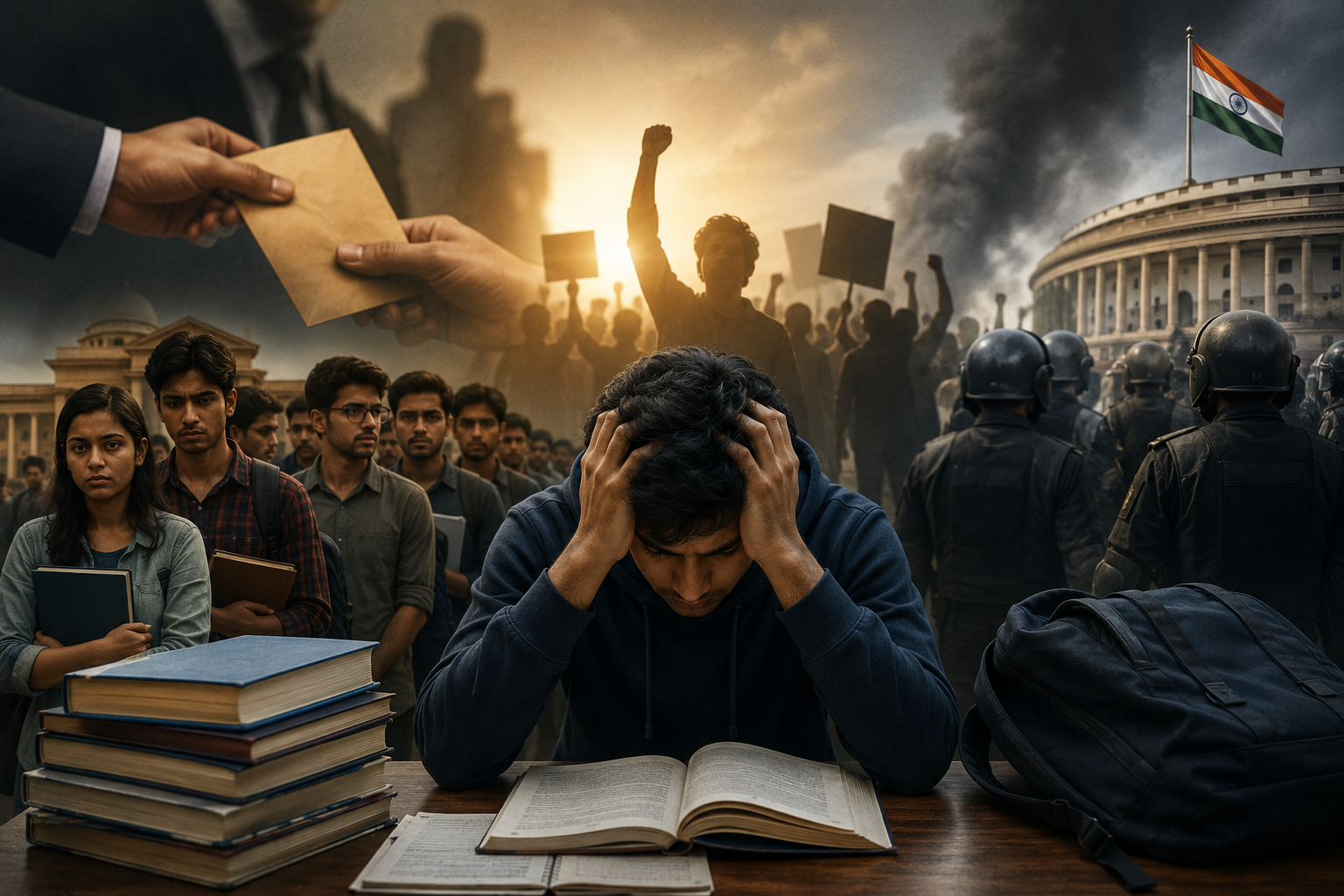
I write this article not merely as an individual, but as one among countless young Indians who are increasingly frustrated by the widening gap between the aspirations of our generation and the responsiveness of our public institutions. The strength of any nation lies not only in its economy or military but in the confidence, education, and opportunities it provides to its youth. If we fail our younger generation, we fail the nation itself, regardless of how impressive our GDP figures or economic statistics may appear.
India possesses one of the largest youth populations in the world. This demographic advantage should be our greatest national asset. Yet many young people feel that the education system has failed to evolve at the pace required by the modern world. Students continue to struggle with outdated curricula, excessive emphasis on examinations over practical skills, inadequate career guidance, uneven quality across institutions, and a disconnect between education and industry needs. Graduates often find themselves ill-prepared for the rapidly changing job market despite years of academic effort.
Perhaps the greatest tragedy is the growing erosion of trust in the fairness of examinations themselves. Incidents such as the widely reported NEET examination paper leak have shaken the confidence of millions of students who dedicate years of disciplined study in pursuit of a single opportunity. Every examination compromised by malpractice sends a devastating message to honest aspirants—that merit alone may no longer be enough.
Equally disturbing are recurring allegations of corruption in parts of the education and employment ecosystem. Whenever reports emerge of candidates allegedly paying intermediaries to obtain examination papers, manipulate recruitment processes, or secure public positions through unfair means, it undermines the credibility of institutions built to reward talent and hard work. Even the perception that such practices may exist is enough to damage public confidence. Honest students should never feel they are competing not only against other candidates but also against corruption, influence, or money.
This creates a dangerous cycle of distrust. Young people begin to question whether years of sacrifice, sleepless nights, and relentless preparation can truly compete with systemic malpractice. Such doubts are deeply corrosive to a society founded on the principles of equality of opportunity and justice.
Governments, irrespective of political affiliation, are elected to serve the people and strengthen public institutions. When systemic shortcomings persist, citizens naturally expect transparent communication, accountability, and meaningful reform rather than silence or defensiveness. Public confidence is strengthened when governments openly acknowledge challenges, explain corrective measures, invite expert participation, and regularly report progress.
Many young people also worry that criticism is too often treated as hostility rather than constructive feedback. In a healthy democracy, disagreement is not a threat to governance but an opportunity to improve it. The freedom to question policies, debate ideas, and peacefully express dissatisfaction is an essential part of democratic life. When people believe that their concerns are ignored until they become large-scale protests, frustration inevitably deepens and trust in institutions begins to erode.
No citizen should feel compelled to plead repeatedly for fundamental improvements in education, employment, examination integrity, or public administration. Effective governance means identifying emerging problems before they become crises. It requires accessible grievance-redress mechanisms, regular public consultations with educators, industry experts, researchers, employers, students, and independent oversight bodies, along with a willingness to adapt policies based on evidence rather than political convenience.
The government should make greater use of public communication platforms to discuss the state of education honestly. Citizens deserve to know what shortcomings have been identified, what reforms are being implemented to secure examinations and recruitment processes, what timelines have been established, and how success will be measured. Transparency, independent investigations into examination irregularities, stronger anti-corruption safeguards, and swift accountability for wrongdoing are essential to restoring faith in the system.
History has repeatedly shown that societies flourish when governments remain responsive to the people they represent. Ignoring legitimate concerns, regardless of which political party is in power, risks widening the divide between citizens and institutions. A democracy thrives when governments listen before dissatisfaction escalates into widespread unrest, not after.
Our nation deserves an education system that rewards merit, protects honest students, safeguards the integrity of examinations, and inspires confidence in public recruitment. The true measure of national progress is not only economic growth but also the confidence that young citizens have in their future and in the institutions that govern them.
I sincerely hope that this conversation moves beyond political rhetoric and becomes a collective national effort to strengthen education, restore public trust, eliminate corruption wherever it exists, and ensure that every young Indian feels heard, respected, and empowered to contribute to the country's future.
Yours faithfully,
A Concerned Citizen